have us call you right now.

The 5 Best Direct Air Capture Carbon Credit Projects of 2026

The 5 Best Direct Air Capture Carbon Credit Projects of 2026

Last updated:

Apr 29, 2025

Apr 29, 2025

DAC credits are the most permanent carbon removal you can buy - and in 2026, five projects stand out as genuinely credible options for corporate buyers. Here's what makes each one worth considering, and what to watch out for. Unlike traditional offset methods, DAC offers a scalable, measurable, and permanent solution to extract CO2 directly from the atmosphere. With corporations under increasing pressure to deliver on climate pledges, the demand for verified DAC credits has never been higher.

This guide highlights 2026’s leading DAC carbon credit projects, helping you identify the most effective options for your sustainability strategy. Whether you’re new to carbon offsetting or looking to diversify your portfolio, DAC provides a unique combination of technological innovation and environmental impact.

Direct answer: the 5 best Direct Air Capture carbon credit projects of 2026 are:

  1. STRATOS (1PointFive)

  2. Climeworks Mammoth

  3. Phlair Electra

  4. Deep Sky Alberta

  5. Heirloom California

Each offers verified, permanent CO2 removal certified under Verra, Gold Standard, Puro.earth, or Isometric - the gold standard for companies with science-based net-zero targets. Prices range from approximately €200 to €800 per ton depending on project, volume, and contract structure.

What are Carbon Credits?

A carbon credit represents one metric ton of carbon dioxide (CO2) or its equivalent in other greenhouse gases that has been either removed from the atmosphere or prevented from being emitted. These credits are generated by projects that reduce, avoid, or sequester emissions - such as reforestation, renewable energy, or clean cooking initiatives.

Companies, governments, and individuals can purchase carbon credits to offset their own emissions, helping them achieve net-zero or carbon-neutral goals. Each credit is verified by independent third parties to ensure its legitimacy, preventing double-counting and ensuring real climate impact. Carbon credits play a crucial role in financing sustainable development, particularly in regions where traditional funding is scarce, while providing a measurable way to compensate for unavoidable emissions.

"💡 Expert Tip: Combine at least two project types to form an offsetting portfolio - for example, landfill gas (avoidance) and direct air capture (removal) - to cover both short-term and long-term climate impact."

Boris Bekkering, Commercial Director

Why Direct Air Capture? The Science and Business Case

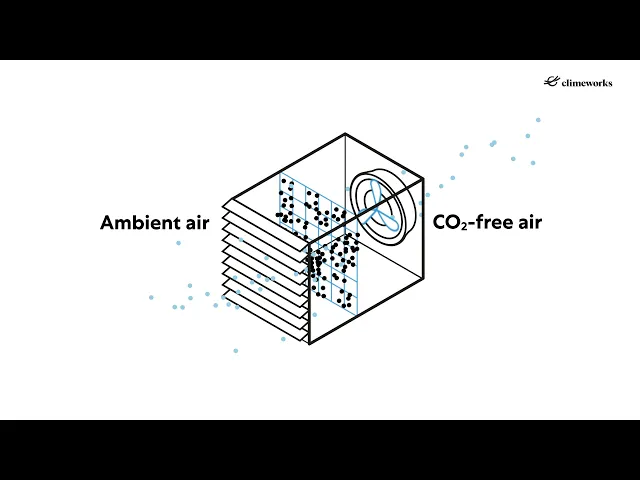
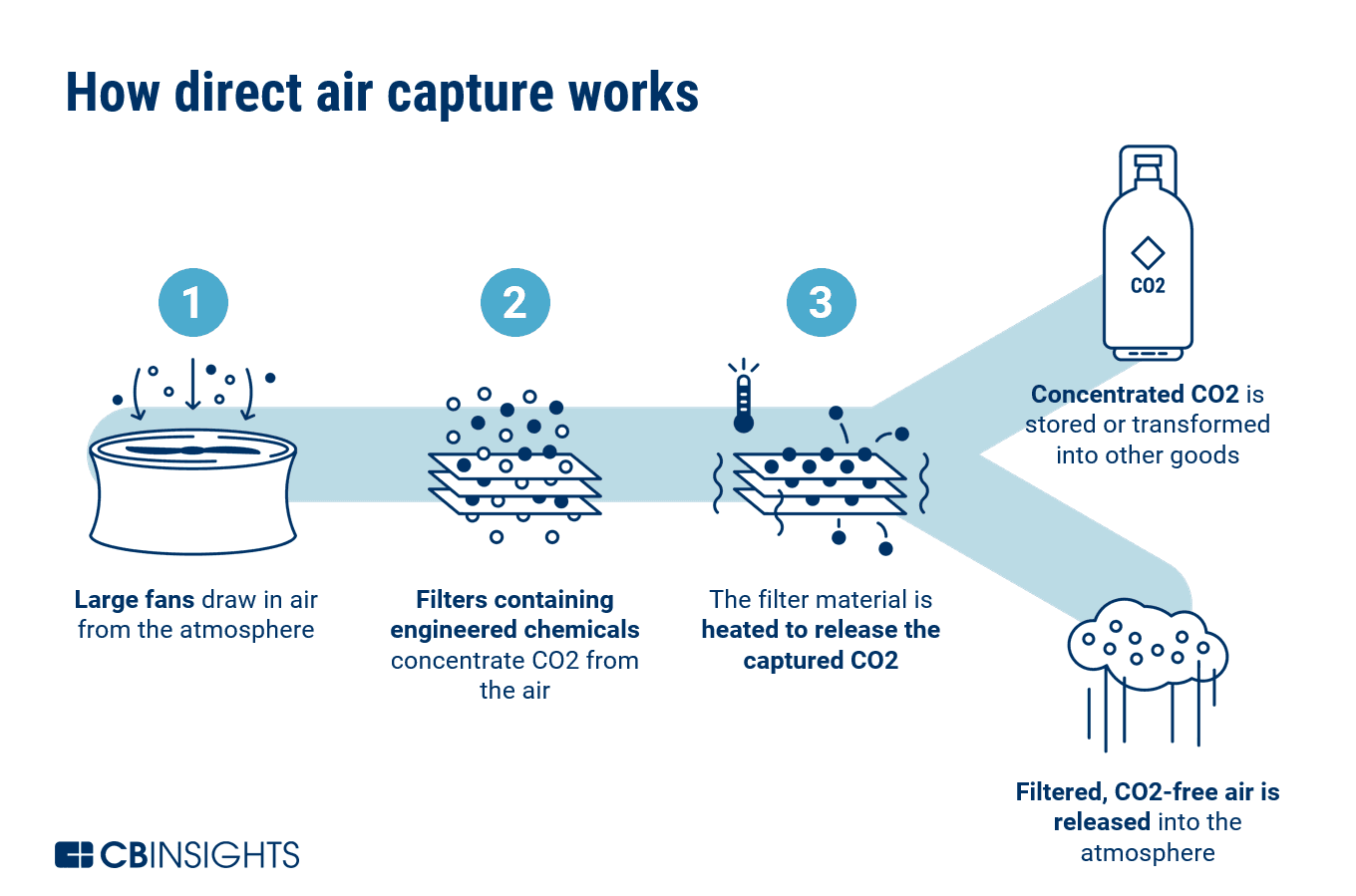
Direct Air Capture is a process that uses chemical reactions to pull CO2 from ambient air, which is then stored underground or repurposed for industrial use. DAC stands out for its ability to deliver permanent carbon removal, making it a critical tool for hard-to-abate sectors and companies aiming for net-zero or carbon-negative goals. This process is visualised in the graph below by CB Insights.
DAC’s key advantages include permanence, as CO2 is stored securely for millennia, avoiding the risk of re-release associated with nature-based solutions. It is also highly scalable, with facilities deployable almost anywhere, and every ton of CO2 removed is precisely quantified, ensuring transparency for corporate reporting. DAC provides less challenges for Monitoring, Reporting and Verification (MRV) than reforestation projects and could prove a scalable solution for hard-to-abate sectors. Additionally, DAC projects often integrate renewable energy, create high-tech jobs, and support local economies.

For businesses, DAC carbon credits are particularly valuable for offsetting unavoidable emissions and demonstrating leadership in climate action. The technology aligns with multiple United Nations Sustainable Development Goals (SDGs), including Climate Action (SDG 13) and Industry, Innovation, and Infrastructure (SDG 9).

What Makes a High-Quality DAC Carbon Credit?

Not all DAC projects are equal. To ensure your investment delivers real impact, prioritize verification and certification from reputable standards like Verra, Gold Standard, or Puro.earth. Additionality is crucial: the CO2 removal must be directly attributable to the project and would not have occurred otherwise. Permanence is another key factor, as CO2 must be stored securely with minimal risk of leakage. Transparency is also essential, with projects providing clear documentation of their technology, energy sources, and storage methods.

Top-tier DAC projects also contribute to broader sustainability goals, such as renewable energy integration and community development.

  1. STRATOS – Texas, USA

STRATOS

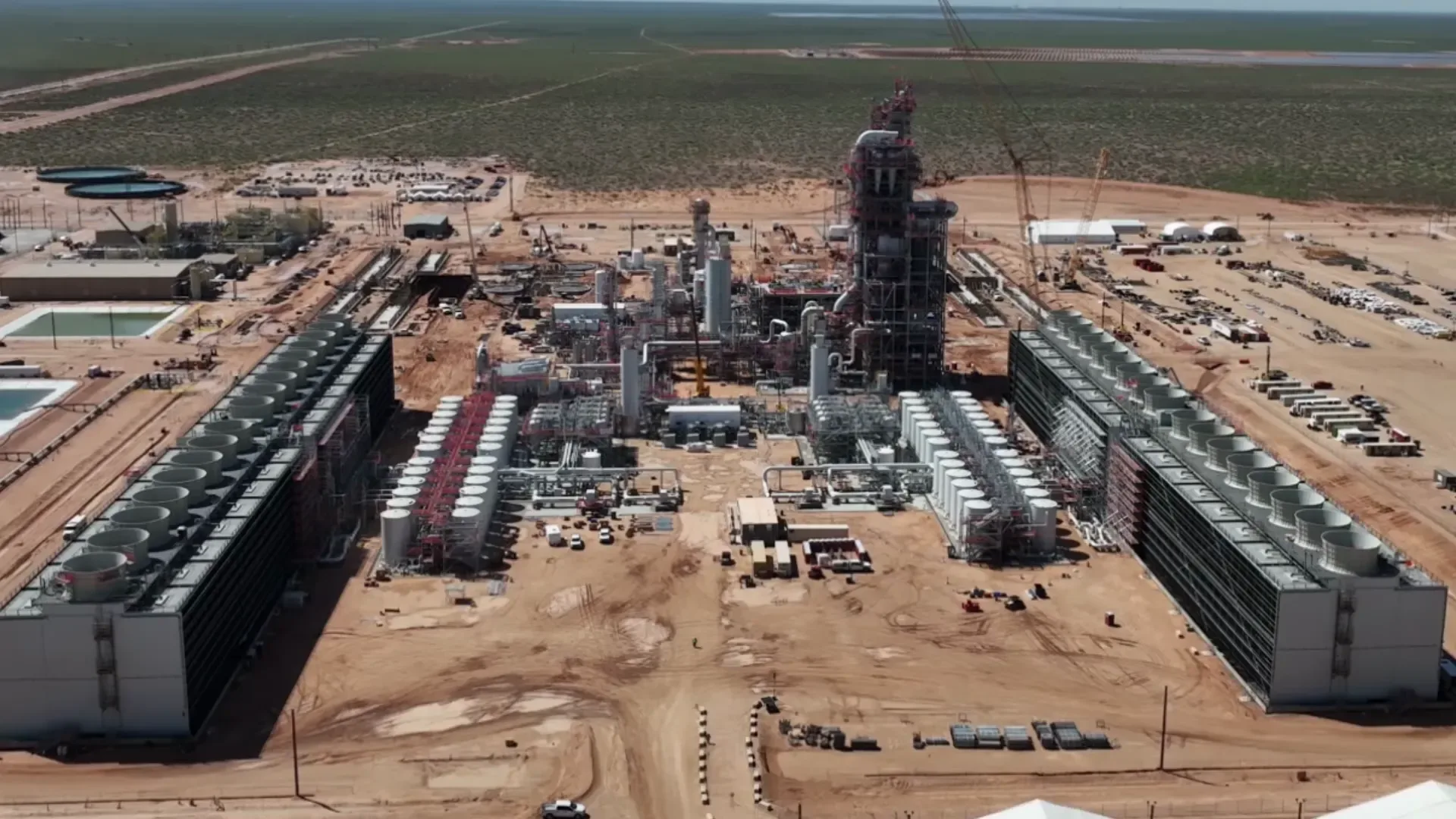
STRATOS, developed by 1PointFive in Ector County, Texas, is set to become the world’s largest Direct Air Capture (DAC) facility. STRATOS is designed to remove 500,000 tons of CO2 annually, makingit the world's largest direct air capture facility. STRATOS stores captured CO2 in deep saline aquifers, ensuring permanence and minimal environmental risk. Microsoft’s landmark agreement to purchase credits from STRATOS underscores its role as a flagship project in scaling DAC technology.

  • Location: Ector County, Texas, USA

  • Annual Impact: 500,000+ tons CO2 removed

  • Funded/bought by: BlackRock, Microsoft, Amazon

  • Status: Initial operations Q2 2026

Key Benefits

  • Climate: Delivers permanent CO2 removal at an unprecedented scale, directly contributing to global net-zero targets.

  • Innovation: Uses renewable energy to minimize operational emissions, setting a new standard for sustainable DAC.

  • Economic: Drives local job creation and positions Texas as a leader in carbon management technology.

  • SDGs: Aligns with SDG 9 (Industry, Innovation, and Infrastructure) and SDG 13 (Climate Action).

Why It Stands Out

STRATOS represents a breakthrough in large-scale carbon removal, combining cutting-edge technology with corporate commitment. Its partnership with Microsoft not only secures long-term demand but also validates DAC as a viable solution for hard-to-abate emissions. The project’s size, renewable energy integration, and secure storage make it a global benchmark for high-impact climate action. By demonstrating the feasibility of gigaton-scale CO2 removal, STRATOS is paving the way for the next generation of DAC facilities.

  1. Phlair Electra - Rotterdam, the Netherlands
Phlair

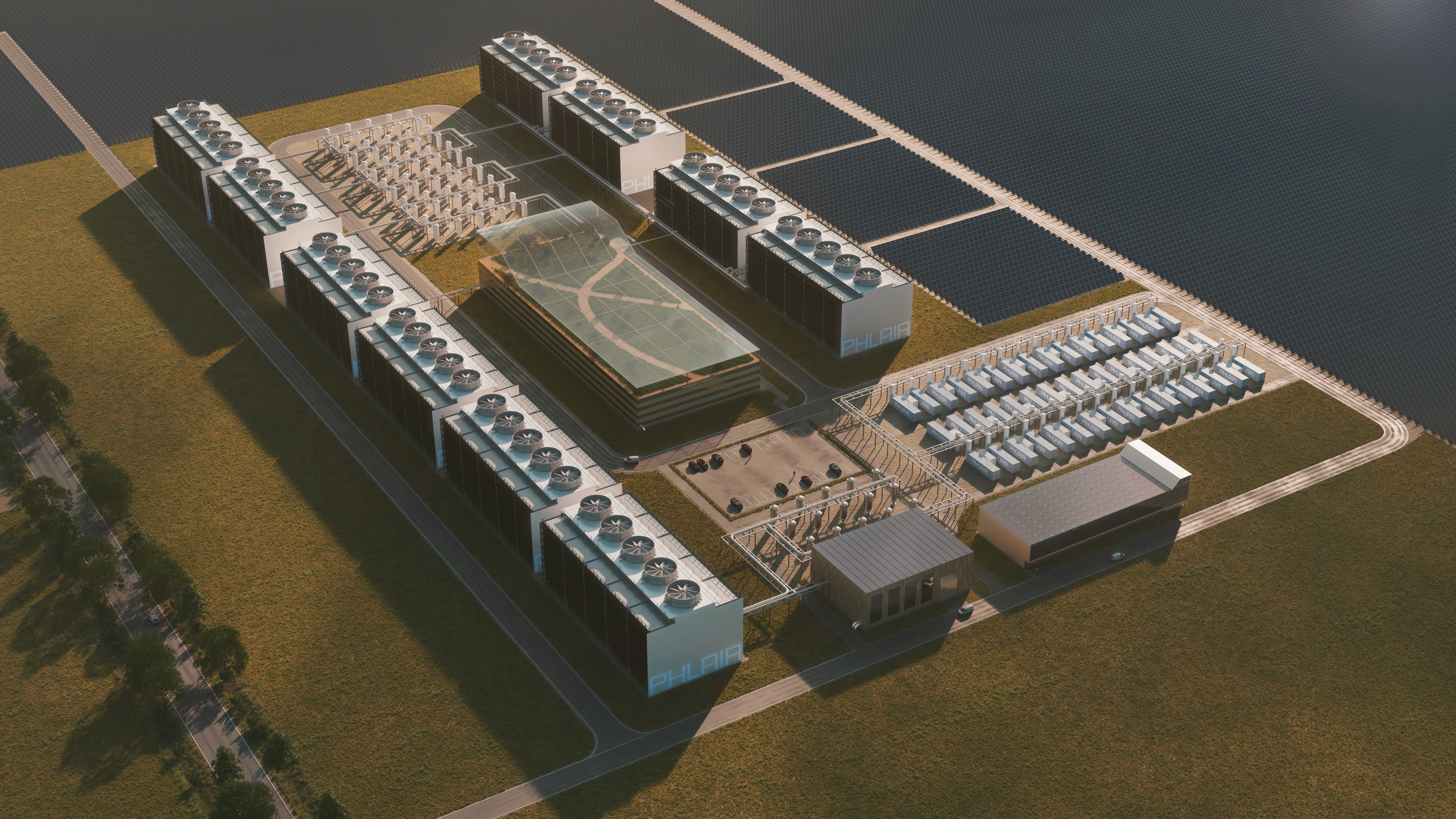
Phlair Electra, developed by German climate tech company Phlair and located in Rotterdam, is one of Europe's first operational direct air capture facilities to generate verified carbon removal credits. The plant captures 260 tons of CO2 per year using Phlair's proprietary electrochemical Hydrolyzer technology, which runs entirely on behind-the-meter solar electricity and requires up to three times less energy than conventional thermal DAC systems. Certified by Isometric, captured CO2 is permanently mineralised in partnership with storage partner Paebbl. Early buyers include Shopify, Stripe, and Klarna.

  • Location: Rotterdam, Netherlands

  • Annual Impact: 260+ tons CO2 removed (scaling to 15,000+ tons with Project Dawn)

  • Funded/bought by: Shopify, Stripe, Klarna

  • Status: Initial operations Q2 2026

Key Benefits

  • Climate: Delivers permanent, verified CO2 removal powered entirely by renewable electricity, with no reliance on fossil fuels at any stage of the capture process.

  • Innovation: Phlair's Hydrolyzer technology cuts energy requirements by up to 3x compared to thermal DAC approaches, putting sub-$100/ton removal costs within reach at commercial scale.

  • Economic: Backed by German federal funding and a €14.5M seed round, Phlair is building a European DAC supply chain independent of US-dominated infrastructure.

  • SDGs: Aligns with SDG 9 (Industry, Innovation, and Infrastructure) and SDG 13 (Climate Action).

Why It Stands Out

Phlair Electra is one of the few operational DAC projects in continental Europe generating credits today - not in a future pipeline. Its electrochemical approach is a meaningful technical departure from the energy-intensive thermal systems used by most competitors, and its Rotterdam location places it at the heart of one of Europe's largest industrial clusters. With Project Dawn - its first large commercial facility targeting over 15,000 tons of CO2 per year - Phlair is positioning itself as Europe's answer to American DAC dominance. For European corporate buyers looking to align with the EU Carbon Removals Certification Framework (CRCF) and CSRD reporting requirements, Phlair offers a credible, locally-sourced removal option with robust third-party verification.

Deep Sky Alberta – Alberta, Canada
Deep Sky

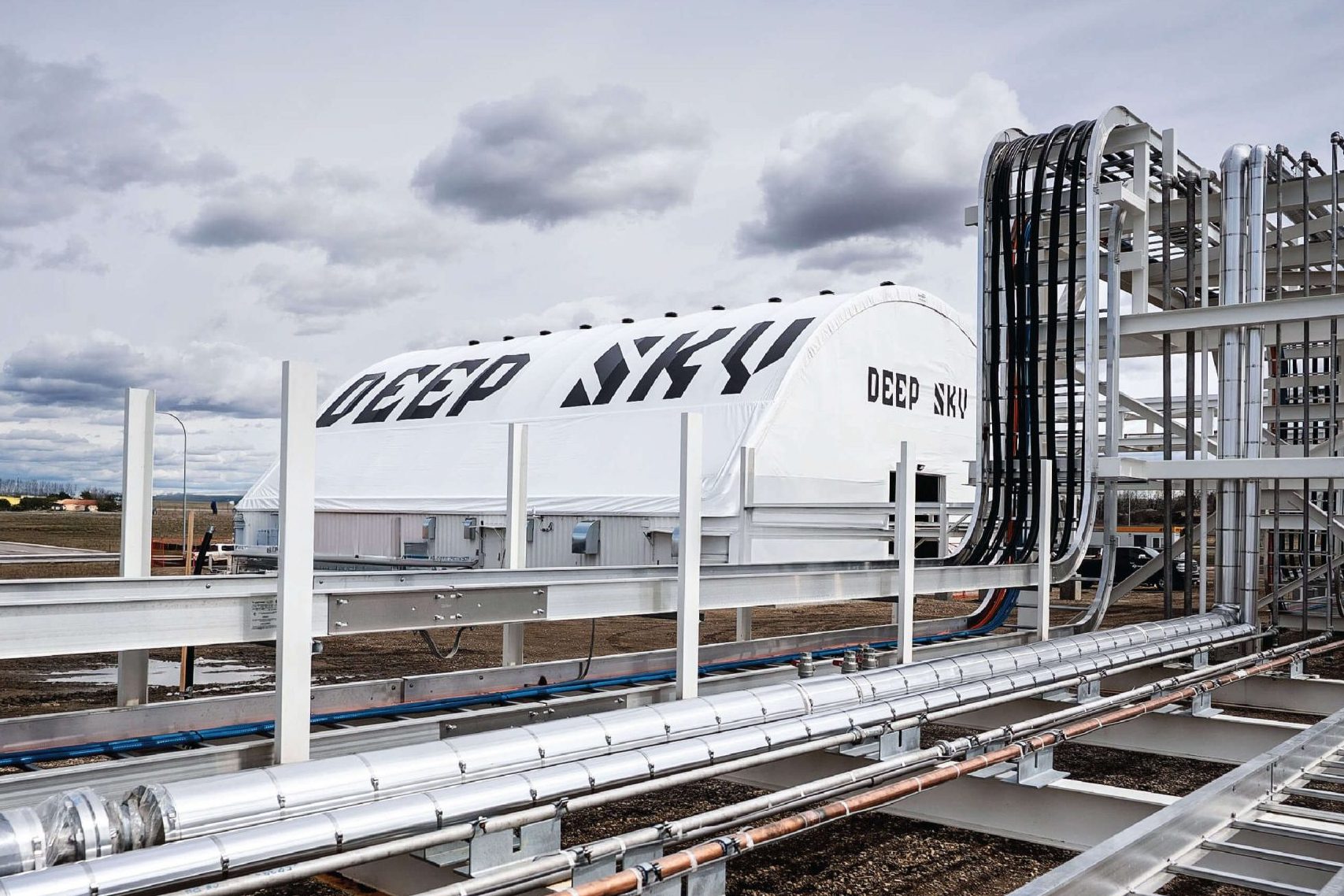
Deep Sky Alberta is a multi-technology DAC project that brings together multiple startups to test and deploy innovative carbon removal solutions at a single site. Currently in development, the project aims to remove over 10,000 tons of CO2 annually, with plans to scale significantly. Its technology-agnostic model fosters collaboration and accelerates the commercialization of next-generation DAC systems.

  • Location: Alberta, Canada

  • Annual Impact: 10,000+ tons CO2 removed (scaling)

  • Funded/bought by: Breakthrough Energy (Bill Gates), Airbus

  • Status: In development

Key Benefits

  • Climate: Advances multiple DAC technologies simultaneously, speeding up innovation.

  • Innovation: Acts as a living lab for DAC startups, reducing barriers to entry for new solutions.

  • Economic: Strengthens Alberta’s position as a leader in carbon capture and storage (CCS).

  • SDGs: Supports SDG 9 (Industry, Innovation, and Infrastructure) and SDG 17 (Partnerships for the Goals).

Why It Stands Out

Deep Sky’s unique model of hosting diverse DAC technologies under one roof makes it a catalyst for industry-wide progress. By providing a platform for startups to collaborate and scale, the project is driving down costs and increasing the efficiency of carbon removal. Its focus on innovation and scalability positions Deep Sky as a key player in the future of DAC.

  1. Climeworks Iceland – Iceland

Climeworks

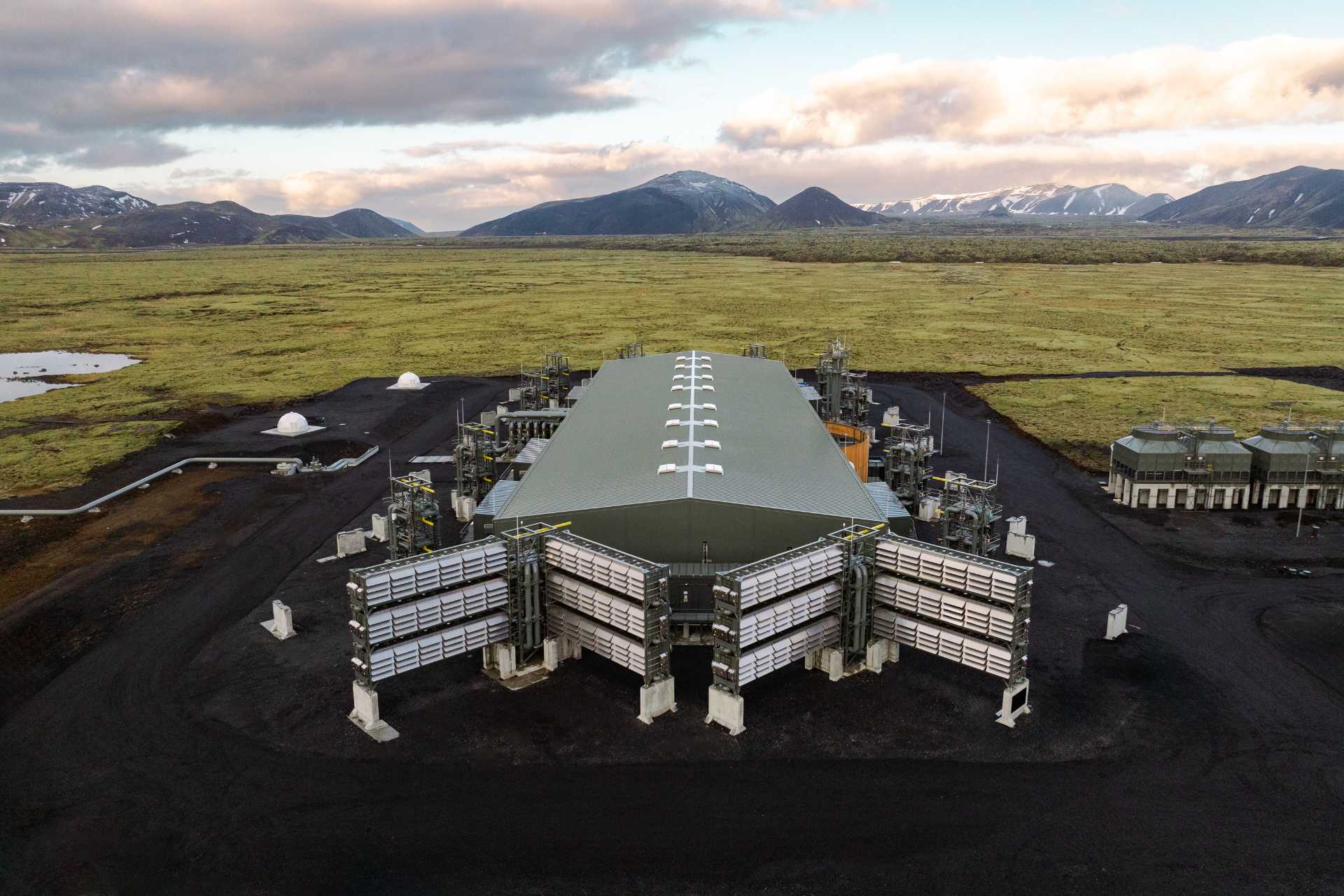
Climeworks’ Orca plant in Iceland is the world’s first commercial DAC facility, removing over 36,000 tons of CO2 annually. The project uses geothermal energy to power its operations and stores CO2 permanently in basalt rock formations through mineralization. Certified by the Gold Standard, Orca has set the benchmark for high-integrity, renewable-powered carbon removal.

  • Location: Iceland

  • Annual Impact: 36,000+ tons CO2 removed

  • Funded/bought by: Microsoft, Stripe, BCG

  • Status: Operational

Key Benefits

  • Climate: Offers permanent CO2 storage with minimal environmental impact.

  • Innovation: Proves the viability of geological storage and renewable-powered DAC.

  • Biodiversity: Minimal land and water use, preserving Iceland’s natural ecosystems.

  • SDGs: Aligns with SDG 7 (Affordable and Clean Energy) and SDG 13 (Climate Action).

Why It Stands Out

As the first commercial DAC facility, Orca has demonstrated that large-scale carbon removal is not only possible but also commercially viable. Its success has inspired Climeworks’ expansion, including the development of the Mammoth facility, which will increase capacity tenfold. Orca’s combination of geological storage, renewable energy, and proven performance makes it a gold standard in the DAC industry.

  1. Heirloom – California and Louisiana, USA
Heirloom

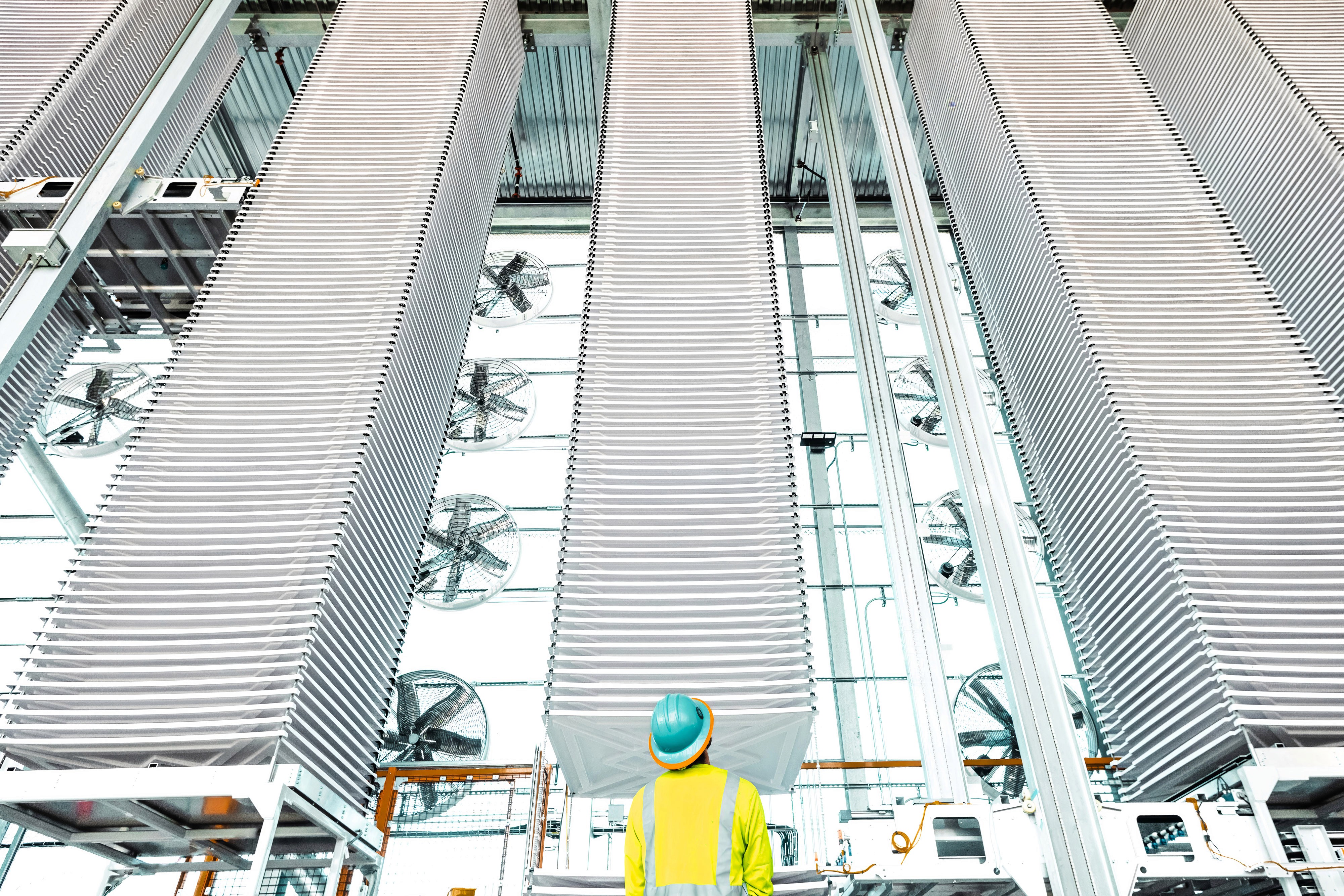
Heirloom California is pioneering limestone-based DAC, a lower-cost and energy-efficient alternative to traditional methods. Currently in its pilot phase, the project removes over 1,000 tons of CO2 annually, with a focus on rapid scaling. Certified by Verra, Heirloom’s technology uses natural limestone to absorb CO2, which is then permanently stored underground.

As of 2026, Heiloom is developing two Louisiana facilities with a combined capacity of 320,000 tons per year. One of these facilities is due operational in 2026.

  • Location: California and Louisiana, USA

  • Annual Impact: 1,000+ tons CO2 removed (pilot phase). 320,000+ once fully operational.

  • Funded/bought by: Breakthrough Energy (Bill Gates), Mitsubishi Corp. Siemens Fin. Services

  • Status: Pilot operational, scaling completed in 2026

Key Benefits

  • Climate: Reduces energy requirements and operational costs, making DAC more affordable.

  • Innovation: Limestone-based capture offers a scalable pathway to gigaton-level removal.

  • Community: Supports California’s ambitious climate goals and clean tech economy.

  • SDGs: Contributes to SDG 9 (Industry, Innovation, and Infrastructure) and SDG 13 (Climate Action).

Why It Stands Out

Heirloom’s limestone-based approach is a game-changer for the economics of DAC. By significantly lowering the cost of carbon capture, the project is making high-quality CO2 removal accessible to a broader range of businesses. Its focus on affordability and scalability positions Heirloom as a leader in the next wave of carbon removal innovation.

Project Name

Location

Certification

Annual Removal (tons CO2)

Key Co-Benefits

STRATOS (1PointFive)

Texas, USA

Verra (expected)

500,000+

Largest DAC facility, saline storage

Phlair Electra

Rotterdam, the Netherlands

Isometric

260+ (scaling to 15.000)

Electrochemical Hydrolyzer, behind meter power

Deep Sky Alberta

Alberta, Canada

In development

10,000+ (scaling)

Multi-tech collaboration

Climeworks Iceland

Iceland

Gold Standard

36,000+

Geological storage, renewable power

Heirloom Louisiana

Louisiana, USA

Verra

320,000+

Low-cost limestone-based DAC

How Much Do Direct Air Capture Carbon Credits Cost in 2026?

DAC credits are the most expensive carbon removal you can buy - and for good reason. Permanent, verified, and technology-driven, they represent a fundamentally different class of climate action compared to nature-based offsets. In 2026, prices vary significantly depending on the project, contract structure, and volume.

As a rough guide:

STRATOS (1PointFive) and Project Bison are primarily sold through long-term corporate offtake agreements. Microsoft's deals in this space have been reported at around €200–€300 per ton, but these are multi-year, multi-hundred-thousand-ton contracts. Spot access for smaller buyers is limited.

Climeworks offers subscription and enterprise contracts through its own platform. Prices currently range from approximately €600–€800 per ton, reflecting Iceland's geothermal-powered geological storage and Gold Standard certification.

Heirloom is targeting a cost curve below €100/ton at scale, but today's pilot-phase credits are priced significantly higher as the technology matures. Their Louisiana facilities, expected online in 2026, should bring pricing down considerably.

Deep Sky Alberta does not yet sell credits publicly, as the project is still in development.

For most corporate buyers, DAC credits make most sense as a component of a blended portfolio - pairing high-permanence removal with lower-cost nature-based or biochar credits to balance impact and budget. Regreener advises clients on exactly this trade-off, based on their specific SBTi commitments and sector exposure. Want to stay updated on the latest DAC news? Check out the dedicated DAC webpage by the Department of Energy.

Curious what DAC credits would cost for your portfolio?

Want to know which credits fit your company's climate strategy?

Book a free consultation Today

How to Integrate DAC Credits Into Your Carbon Removal Strategy

There's a strong portfolio argument for combining DAC with other removal methods. Nature-based credits such as forest protection or soil carbon offer lower costs and near-term availability, but carry greater reversal risk. Engineered removals like biochar and enhanced weathering sit in the middle ground - more durable than nature-based solutions, less capital-intensive than DAC. A blended strategy across these categories spreads both cost and risk, while allowing you to gradually shift toward higher-permanence credits as the DAC market matures and prices decline.

"💡 Expert Tip: Start by allocating a smaller percentage of your offset need to DAC projects and form a strategy to increase the percentage year on year. This way, you have a clear driver to prioritise reduction."

Boris Bekkering, Commercial Director

DAC projects also have a practical advantage when it comes to ESG reporting. Because credits are generated with rigorous MRV - every tonne tracked from capture to underground storage - they produce the kind of verifiable, auditable data that satisfies both internal sustainability teams and external assurance requirements under frameworks like CSRD and GHG Protocol. For companies facing increasing scrutiny over greenwashing claims, that traceability is not a nice-to-have; it is increasingly the baseline that investors and regulators expect.

For companies operating under Science-Based Targets, this is where DAC credits become especially relevant. The SBTi's Corporate Net-Zero Standard is explicit: emissions reductions come first, and carbon removal credits are reserved for residual emissions that cannot yet be eliminated. Used in that context, DAC credits are among the most defensible tools available, because their permanence and measurability hold up to the scrutiny that science-based frameworks demand.

Risks and Challenges in the DAC Market

DAC credits are among the most expensive carbon removal options, though prices are expected to decline as technology matures. Supply constraints are another challenge, as large corporate buyers like Microsoft secure long-term agreements. It’s important to act early to lock in capacity. Additionally, staying informed about evolving certification standards and compliance requirements is crucial due to regulatory uncertainty.

Microsoft’s Influence on the DAC Market

Microsoft has become a driving force in the DAC market, signing record-breaking purchase agreements to secure millions of tons of carbon removal credits. In 2024, the tech giant agreed to buy 500,000 metric tons of DAC credits from 1PointFive’s STRATOS facility in Texas-the largest single DAC purchase to date-alongside smaller deals with CarbonCapture’s Project Bison in Wyoming and Deep Sky in Alberta. These agreements not only accelerate project development but also set a new standard for corporate climate leadership.

Microsoft’s large-scale purchases are spurring innovation but also creating supply constraints, as other buyers compete for limited DAC capacity. While DAC credits remain expensive, often exceeding €800 per ton, Microsoft’s long-term commitments are helping to bring costs down and attract new supplierstechxplore.com+1. By integrating DAC into its net-zero strategy, Microsoft is encouraging other Fortune 500 companies to follow suit, signaling strong future demand.

DAC vs. Nature-Based Carbon Credits: Which Is Right for Your Strategy?

Direct Air Capture and nature-based solutions both remove CO2 from the atmosphere. But they do it in fundamentally different ways, at fundamentally different price points, and with fundamentally different risk profiles. Understanding the difference matters when you're building a credible, audit-proof offset strategy.

DAC offers what nature-based projects cannot: guaranteed permanence. CO2 stored in geological formations or mineralised in basalt rock isn't going anywhere for thousands of years. It's also fully measurable and independently verified at the ton level, which makes it highly defensible under CSRD reporting, SBTi frameworks, and scrutiny from investors or NGOs. The trade-off is cost - DAC credits typically run between €200 and €800 per ton depending on the project and contract structure, making them impractical as a bulk solution for most companies.

Nature-based credits - think agroforestry, are far more affordable, often ranging from €15 to €60 per ton for high-quality verified projects. They also deliver meaningful co-benefits: biodiversity, community development, and local ecosystem resilience. The limitation is permanence. A forest can burn, flood, or be felled. Even well-managed nature-based projects carry a degree of reversal risk that geological storage simply does not.

The most credible corporate climate strategies don't choose one over the other - they combine both. Use nature-based credits to offset larger volumes of emissions affordably and deliver on co-benefit commitments today. Use DAC credits to cover your hardest-to-abate residual emissions and demonstrate genuine long-term removal ambition. As SBTi frameworks evolve and regulators increasingly distinguish between removal types under frameworks like the EU CRCF, a blended portfolio also gives you flexibility: you're not overexposed to any single project type, technology risk, or supply constraint.

The right balance depends on your emissions profile, your reporting obligations, and your timeline. Regreener helps companies build exactly this kind of portfolio - combining high-integrity nature-based projects with verified DAC credits, calibrated to your specific SBTi commitments and sector.

Want to find the right balance for your portfolio?

Want to know which credits fit your company's climate strategy?

Book a free consultation Today

The Future of Direct Air Capture: Innovations to Watch

The cost of DAC has been the central challenge since the technology's inception, and that is where the most meaningful progress is happening. A new generation of electrochemical approaches - including Phlair's hydrolyzer technology - is targeting energy consumption well below that of first-generation thermal systems. Advances in sorbent materials are extending filter lifespans and improving throughput. The ambition across the industry is to reach costs below €100 per tonne within this decade, a threshold that would make DAC competitive with many nature-based solutions at scale.

Government support is accelerating deployment on both sides of the Atlantic. The U.S. Inflation Reduction Act's 45Q tax credit offers up to €180 per tonne for DAC with permanent geological storage, while Europe's Carbon Removal Certification Framework is establishing the regulatory groundwork for DAC credits to qualify under CSRD - relevant for any European corporate buyer evaluating their reporting obligations.

Geographically, the DAC landscape is also broadening beyond its North American and Icelandic roots. Canada has emerged as a serious hub, the Middle East is attracting investment given its low energy costs and CO₂ storage capacity, and Australia is exploring DAC as part of its broader carbon market ambitions. For corporate buyers, a more distributed supply base means less concentration risk and, over time, more competitive pricing.upply.

Next steps, how to buy DAC Carbon Credits

Procuring DAC credits can be done through Regreener. Regreener sources high quality credits by subjecting projects to a stringent rating framework. DAC projects can be a great option to support climate innovation and direct mitigation efforts. Regreener would advise to work with a balanced portfolio of offsets. If you'd like to learn more about setting up an effective carbon offsetting strategy, we would be happy to have a chat.

Direct Air Capture is a game-changer for corporate climate strategies, offering permanence, scalability, and measurability. By investing in verified DAC projects, businesses can achieve their net-zero goals while supporting global innovation.

Ready to explore DAC for your sustainability strategy? Contact Regreener’s experts to discuss the best options for your needs.


DAC credits are the most permanent carbon removal you can buy - and in 2026, five projects stand out as genuinely credible options for corporate buyers. Here's what makes each one worth considering, and what to watch out for. Unlike traditional offset methods, DAC offers a scalable, measurable, and permanent solution to extract CO2 directly from the atmosphere. With corporations under increasing pressure to deliver on climate pledges, the demand for verified DAC credits has never been higher.

This guide highlights 2026’s leading DAC carbon credit projects, helping you identify the most effective options for your sustainability strategy. Whether you’re new to carbon offsetting or looking to diversify your portfolio, DAC provides a unique combination of technological innovation and environmental impact.

Direct answer: the 5 best Direct Air Capture carbon credit projects of 2026 are:

  1. STRATOS (1PointFive)

  2. Climeworks Mammoth

  3. Phlair Electra

  4. Deep Sky Alberta

  5. Heirloom California

Each offers verified, permanent CO2 removal certified under Verra, Gold Standard, Puro.earth, or Isometric - the gold standard for companies with science-based net-zero targets. Prices range from approximately €200 to €800 per ton depending on project, volume, and contract structure.

What are Carbon Credits?

A carbon credit represents one metric ton of carbon dioxide (CO2) or its equivalent in other greenhouse gases that has been either removed from the atmosphere or prevented from being emitted. These credits are generated by projects that reduce, avoid, or sequester emissions - such as reforestation, renewable energy, or clean cooking initiatives.

Companies, governments, and individuals can purchase carbon credits to offset their own emissions, helping them achieve net-zero or carbon-neutral goals. Each credit is verified by independent third parties to ensure its legitimacy, preventing double-counting and ensuring real climate impact. Carbon credits play a crucial role in financing sustainable development, particularly in regions where traditional funding is scarce, while providing a measurable way to compensate for unavoidable emissions.

"💡 Expert Tip: Combine at least two project types to form an offsetting portfolio - for example, landfill gas (avoidance) and direct air capture (removal) - to cover both short-term and long-term climate impact."

Boris Bekkering, Commercial Director

Why Direct Air Capture? The Science and Business Case

Direct Air Capture is a process that uses chemical reactions to pull CO2 from ambient air, which is then stored underground or repurposed for industrial use. DAC stands out for its ability to deliver permanent carbon removal, making it a critical tool for hard-to-abate sectors and companies aiming for net-zero or carbon-negative goals. This process is visualised in the graph below by CB Insights.

DAC’s key advantages include permanence, as CO2 is stored securely for millennia, avoiding the risk of re-release associated with nature-based solutions. It is also highly scalable, with facilities deployable almost anywhere, and every ton of CO2 removed is precisely quantified, ensuring transparency for corporate reporting. DAC provides less challenges for Monitoring, Reporting and Verification (MRV) than reforestation projects and could prove a scalable solution for hard-to-abate sectors. Additionally, DAC projects often integrate renewable energy, create high-tech jobs, and support local economies.

For businesses, DAC carbon credits are particularly valuable for offsetting unavoidable emissions and demonstrating leadership in climate action. The technology aligns with multiple United Nations Sustainable Development Goals (SDGs), including Climate Action (SDG 13) and Industry, Innovation, and Infrastructure (SDG 9).

What Makes a High-Quality DAC Carbon Credit?

Not all DAC projects are equal. To ensure your investment delivers real impact, prioritize verification and certification from reputable standards like Verra, Gold Standard, or Puro.earth. Additionality is crucial: the CO2 removal must be directly attributable to the project and would not have occurred otherwise. Permanence is another key factor, as CO2 must be stored securely with minimal risk of leakage. Transparency is also essential, with projects providing clear documentation of their technology, energy sources, and storage methods.

Top-tier DAC projects also contribute to broader sustainability goals, such as renewable energy integration and community development.

  1. STRATOS – Texas, USA

STRATOS

STRATOS, developed by 1PointFive in Ector County, Texas, is set to become the world’s largest Direct Air Capture (DAC) facility. STRATOS is designed to remove 500,000 tons of CO2 annually, makingit the world's largest direct air capture facility. STRATOS stores captured CO2 in deep saline aquifers, ensuring permanence and minimal environmental risk. Microsoft’s landmark agreement to purchase credits from STRATOS underscores its role as a flagship project in scaling DAC technology.

  • Location: Ector County, Texas, USA

  • Annual Impact: 500,000+ tons CO2 removed

  • Funded/bought by: BlackRock, Microsoft, Amazon

  • Status: Initial operations Q2 2026

Key Benefits

  • Climate: Delivers permanent CO2 removal at an unprecedented scale, directly contributing to global net-zero targets.

  • Innovation: Uses renewable energy to minimize operational emissions, setting a new standard for sustainable DAC.

  • Economic: Drives local job creation and positions Texas as a leader in carbon management technology.

  • SDGs: Aligns with SDG 9 (Industry, Innovation, and Infrastructure) and SDG 13 (Climate Action).

Why It Stands Out

STRATOS represents a breakthrough in large-scale carbon removal, combining cutting-edge technology with corporate commitment. Its partnership with Microsoft not only secures long-term demand but also validates DAC as a viable solution for hard-to-abate emissions. The project’s size, renewable energy integration, and secure storage make it a global benchmark for high-impact climate action. By demonstrating the feasibility of gigaton-scale CO2 removal, STRATOS is paving the way for the next generation of DAC facilities.

  1. Phlair Electra - Rotterdam, the Netherlands

Phlair

Phlair Electra, developed by German climate tech company Phlair and located in Rotterdam, is one of Europe's first operational direct air capture facilities to generate verified carbon removal credits. The plant captures 260 tons of CO2 per year using Phlair's proprietary electrochemical Hydrolyzer technology, which runs entirely on behind-the-meter solar electricity and requires up to three times less energy than conventional thermal DAC systems. Certified by Isometric, captured CO2 is permanently mineralised in partnership with storage partner Paebbl. Early buyers include Shopify, Stripe, and Klarna.

  • Location: Rotterdam, Netherlands

  • Annual Impact: 260+ tons CO2 removed (scaling to 15,000+ tons with Project Dawn)

  • Funded/bought by: Shopify, Stripe, Klarna

  • Status: Initial operations Q2 2026

Key Benefits

  • Climate: Delivers permanent, verified CO2 removal powered entirely by renewable electricity, with no reliance on fossil fuels at any stage of the capture process.

  • Innovation: Phlair's Hydrolyzer technology cuts energy requirements by up to 3x compared to thermal DAC approaches, putting sub-$100/ton removal costs within reach at commercial scale.

  • Economic: Backed by German federal funding and a €14.5M seed round, Phlair is building a European DAC supply chain independent of US-dominated infrastructure.

  • SDGs: Aligns with SDG 9 (Industry, Innovation, and Infrastructure) and SDG 13 (Climate Action).

Why It Stands Out

Phlair Electra is one of the few operational DAC projects in continental Europe generating credits today - not in a future pipeline. Its electrochemical approach is a meaningful technical departure from the energy-intensive thermal systems used by most competitors, and its Rotterdam location places it at the heart of one of Europe's largest industrial clusters. With Project Dawn - its first large commercial facility targeting over 15,000 tons of CO2 per year - Phlair is positioning itself as Europe's answer to American DAC dominance. For European corporate buyers looking to align with the EU Carbon Removals Certification Framework (CRCF) and CSRD reporting requirements, Phlair offers a credible, locally-sourced removal option with robust third-party verification.

Deep Sky Alberta – Alberta, Canada

Deep Sky

Deep Sky Alberta is a multi-technology DAC project that brings together multiple startups to test and deploy innovative carbon removal solutions at a single site. Currently in development, the project aims to remove over 10,000 tons of CO2 annually, with plans to scale significantly. Its technology-agnostic model fosters collaboration and accelerates the commercialization of next-generation DAC systems.

  • Location: Alberta, Canada

  • Annual Impact: 10,000+ tons CO2 removed (scaling)

  • Funded/bought by: Breakthrough Energy (Bill Gates), Airbus

  • Status: In development

Key Benefits

  • Climate: Advances multiple DAC technologies simultaneously, speeding up innovation.

  • Innovation: Acts as a living lab for DAC startups, reducing barriers to entry for new solutions.

  • Economic: Strengthens Alberta’s position as a leader in carbon capture and storage (CCS).

  • SDGs: Supports SDG 9 (Industry, Innovation, and Infrastructure) and SDG 17 (Partnerships for the Goals).

Why It Stands Out

Deep Sky’s unique model of hosting diverse DAC technologies under one roof makes it a catalyst for industry-wide progress. By providing a platform for startups to collaborate and scale, the project is driving down costs and increasing the efficiency of carbon removal. Its focus on innovation and scalability positions Deep Sky as a key player in the future of DAC.

  1. Climeworks Iceland – Iceland

Climeworks

Climeworks’ Orca plant in Iceland is the world’s first commercial DAC facility, removing over 36,000 tons of CO2 annually. The project uses geothermal energy to power its operations and stores CO2 permanently in basalt rock formations through mineralization. Certified by the Gold Standard, Orca has set the benchmark for high-integrity, renewable-powered carbon removal.

  • Location: Iceland

  • Annual Impact: 36,000+ tons CO2 removed

  • Funded/bought by: Microsoft, Stripe, BCG

  • Status: Operational

Key Benefits

  • Climate: Offers permanent CO2 storage with minimal environmental impact.

  • Innovation: Proves the viability of geological storage and renewable-powered DAC.

  • Biodiversity: Minimal land and water use, preserving Iceland’s natural ecosystems.

  • SDGs: Aligns with SDG 7 (Affordable and Clean Energy) and SDG 13 (Climate Action).

Why It Stands Out

As the first commercial DAC facility, Orca has demonstrated that large-scale carbon removal is not only possible but also commercially viable. Its success has inspired Climeworks’ expansion, including the development of the Mammoth facility, which will increase capacity tenfold. Orca’s combination of geological storage, renewable energy, and proven performance makes it a gold standard in the DAC industry.

  1. Heirloom – California and Louisiana, USA

Heirloom

Heirloom California is pioneering limestone-based DAC, a lower-cost and energy-efficient alternative to traditional methods. Currently in its pilot phase, the project removes over 1,000 tons of CO2 annually, with a focus on rapid scaling. Certified by Verra, Heirloom’s technology uses natural limestone to absorb CO2, which is then permanently stored underground.

As of 2026, Heiloom is developing two Louisiana facilities with a combined capacity of 320,000 tons per year. One of these facilities is due operational in 2026.

  • Location: California and Louisiana, USA

  • Annual Impact: 1,000+ tons CO2 removed (pilot phase). 320,000+ once fully operational.

  • Funded/bought by: Breakthrough Energy (Bill Gates), Mitsubishi Corp. Siemens Fin. Services

  • Status: Pilot operational, scaling completed in 2026

Key Benefits

  • Climate: Reduces energy requirements and operational costs, making DAC more affordable.

  • Innovation: Limestone-based capture offers a scalable pathway to gigaton-level removal.

  • Community: Supports California’s ambitious climate goals and clean tech economy.

  • SDGs: Contributes to SDG 9 (Industry, Innovation, and Infrastructure) and SDG 13 (Climate Action).

Why It Stands Out

Heirloom’s limestone-based approach is a game-changer for the economics of DAC. By significantly lowering the cost of carbon capture, the project is making high-quality CO2 removal accessible to a broader range of businesses. Its focus on affordability and scalability positions Heirloom as a leader in the next wave of carbon removal innovation.

Project Name

Location

Certification

Annual Removal (tons CO2)

Key Co-Benefits

STRATOS (1PointFive)

Texas, USA

Verra (expected)

500,000+

Largest DAC facility, saline storage

Phlair Electra

Rotterdam, the Netherlands

Isometric

260+ (scaling to 15.000)

Electrochemical Hydrolyzer, behind meter power

Deep Sky Alberta

Alberta, Canada

In development

10,000+ (scaling)

Multi-tech collaboration

Climeworks Iceland

Iceland

Gold Standard

36,000+

Geological storage, renewable power

Heirloom Louisiana

Louisiana, USA

Verra

320,000+

Low-cost limestone-based DAC

How Much Do Direct Air Capture Carbon Credits Cost in 2026?

DAC credits are the most expensive carbon removal you can buy - and for good reason. Permanent, verified, and technology-driven, they represent a fundamentally different class of climate action compared to nature-based offsets. In 2026, prices vary significantly depending on the project, contract structure, and volume.

As a rough guide:

STRATOS (1PointFive) and Project Bison are primarily sold through long-term corporate offtake agreements. Microsoft's deals in this space have been reported at around €200–€300 per ton, but these are multi-year, multi-hundred-thousand-ton contracts. Spot access for smaller buyers is limited.

Climeworks offers subscription and enterprise contracts through its own platform. Prices currently range from approximately €600–€800 per ton, reflecting Iceland's geothermal-powered geological storage and Gold Standard certification.

Heirloom is targeting a cost curve below €100/ton at scale, but today's pilot-phase credits are priced significantly higher as the technology matures. Their Louisiana facilities, expected online in 2026, should bring pricing down considerably.

Deep Sky Alberta does not yet sell credits publicly, as the project is still in development.

For most corporate buyers, DAC credits make most sense as a component of a blended portfolio - pairing high-permanence removal with lower-cost nature-based or biochar credits to balance impact and budget. Regreener advises clients on exactly this trade-off, based on their specific SBTi commitments and sector exposure. Want to stay updated on the latest DAC news? Check out the dedicated DAC webpage by the Department of Energy.

Curious what DAC credits would cost for your portfolio?

Want to know which credits fit your company's climate strategy?

Book a free consultation Today

How to Integrate DAC Credits Into Your Carbon Removal Strategy

There's a strong portfolio argument for combining DAC with other removal methods. Nature-based credits such as forest protection or soil carbon offer lower costs and near-term availability, but carry greater reversal risk. Engineered removals like biochar and enhanced weathering sit in the middle ground - more durable than nature-based solutions, less capital-intensive than DAC. A blended strategy across these categories spreads both cost and risk, while allowing you to gradually shift toward higher-permanence credits as the DAC market matures and prices decline.

"💡 Expert Tip: Start by allocating a smaller percentage of your offset need to DAC projects and form a strategy to increase the percentage year on year. This way, you have a clear driver to prioritise reduction."

Boris Bekkering, Commercial Director

DAC projects also have a practical advantage when it comes to ESG reporting. Because credits are generated with rigorous MRV - every tonne tracked from capture to underground storage - they produce the kind of verifiable, auditable data that satisfies both internal sustainability teams and external assurance requirements under frameworks like CSRD and GHG Protocol. For companies facing increasing scrutiny over greenwashing claims, that traceability is not a nice-to-have; it is increasingly the baseline that investors and regulators expect.

For companies operating under Science-Based Targets, this is where DAC credits become especially relevant. The SBTi's Corporate Net-Zero Standard is explicit: emissions reductions come first, and carbon removal credits are reserved for residual emissions that cannot yet be eliminated. Used in that context, DAC credits are among the most defensible tools available, because their permanence and measurability hold up to the scrutiny that science-based frameworks demand.

Risks and Challenges in the DAC Market

DAC credits are among the most expensive carbon removal options, though prices are expected to decline as technology matures. Supply constraints are another challenge, as large corporate buyers like Microsoft secure long-term agreements. It’s important to act early to lock in capacity. Additionally, staying informed about evolving certification standards and compliance requirements is crucial due to regulatory uncertainty.

Microsoft’s Influence on the DAC Market

Microsoft has become a driving force in the DAC market, signing record-breaking purchase agreements to secure millions of tons of carbon removal credits. In 2024, the tech giant agreed to buy 500,000 metric tons of DAC credits from 1PointFive’s STRATOS facility in Texas-the largest single DAC purchase to date-alongside smaller deals with CarbonCapture’s Project Bison in Wyoming and Deep Sky in Alberta. These agreements not only accelerate project development but also set a new standard for corporate climate leadership.

Microsoft’s large-scale purchases are spurring innovation but also creating supply constraints, as other buyers compete for limited DAC capacity. While DAC credits remain expensive, often exceeding €800 per ton, Microsoft’s long-term commitments are helping to bring costs down and attract new supplierstechxplore.com+1. By integrating DAC into its net-zero strategy, Microsoft is encouraging other Fortune 500 companies to follow suit, signaling strong future demand.

DAC vs. Nature-Based Carbon Credits: Which Is Right for Your Strategy?

Direct Air Capture and nature-based solutions both remove CO2 from the atmosphere. But they do it in fundamentally different ways, at fundamentally different price points, and with fundamentally different risk profiles. Understanding the difference matters when you're building a credible, audit-proof offset strategy.

DAC offers what nature-based projects cannot: guaranteed permanence. CO2 stored in geological formations or mineralised in basalt rock isn't going anywhere for thousands of years. It's also fully measurable and independently verified at the ton level, which makes it highly defensible under CSRD reporting, SBTi frameworks, and scrutiny from investors or NGOs. The trade-off is cost - DAC credits typically run between €200 and €800 per ton depending on the project and contract structure, making them impractical as a bulk solution for most companies.

Nature-based credits - think agroforestry, are far more affordable, often ranging from €15 to €60 per ton for high-quality verified projects. They also deliver meaningful co-benefits: biodiversity, community development, and local ecosystem resilience. The limitation is permanence. A forest can burn, flood, or be felled. Even well-managed nature-based projects carry a degree of reversal risk that geological storage simply does not.

The most credible corporate climate strategies don't choose one over the other - they combine both. Use nature-based credits to offset larger volumes of emissions affordably and deliver on co-benefit commitments today. Use DAC credits to cover your hardest-to-abate residual emissions and demonstrate genuine long-term removal ambition. As SBTi frameworks evolve and regulators increasingly distinguish between removal types under frameworks like the EU CRCF, a blended portfolio also gives you flexibility: you're not overexposed to any single project type, technology risk, or supply constraint.

The right balance depends on your emissions profile, your reporting obligations, and your timeline. Regreener helps companies build exactly this kind of portfolio - combining high-integrity nature-based projects with verified DAC credits, calibrated to your specific SBTi commitments and sector.

Want to find the right balance for your portfolio?

Want to know which credits fit your company's climate strategy?

Book a free consultation Today

The Future of Direct Air Capture: Innovations to Watch

The cost of DAC has been the central challenge since the technology's inception, and that is where the most meaningful progress is happening. A new generation of electrochemical approaches - including Phlair's hydrolyzer technology - is targeting energy consumption well below that of first-generation thermal systems. Advances in sorbent materials are extending filter lifespans and improving throughput. The ambition across the industry is to reach costs below €100 per tonne within this decade, a threshold that would make DAC competitive with many nature-based solutions at scale.

Government support is accelerating deployment on both sides of the Atlantic. The U.S. Inflation Reduction Act's 45Q tax credit offers up to €180 per tonne for DAC with permanent geological storage, while Europe's Carbon Removal Certification Framework is establishing the regulatory groundwork for DAC credits to qualify under CSRD - relevant for any European corporate buyer evaluating their reporting obligations.

Geographically, the DAC landscape is also broadening beyond its North American and Icelandic roots. Canada has emerged as a serious hub, the Middle East is attracting investment given its low energy costs and CO₂ storage capacity, and Australia is exploring DAC as part of its broader carbon market ambitions. For corporate buyers, a more distributed supply base means less concentration risk and, over time, more competitive pricing.upply.

Next steps, how to buy DAC Carbon Credits

Procuring DAC credits can be done through Regreener. Regreener sources high quality credits by subjecting projects to a stringent rating framework. DAC projects can be a great option to support climate innovation and direct mitigation efforts. Regreener would advise to work with a balanced portfolio of offsets. If you'd like to learn more about setting up an effective carbon offsetting strategy, we would be happy to have a chat.

Direct Air Capture is a game-changer for corporate climate strategies, offering permanence, scalability, and measurability. By investing in verified DAC projects, businesses can achieve their net-zero goals while supporting global innovation.

Ready to explore DAC for your sustainability strategy? Contact Regreener’s experts to discuss the best options for your needs.

DAC credits are the most permanent carbon removal you can buy - and in 2026, five projects stand out as genuinely credible options for corporate buyers. Here's what makes each one worth considering, and what to watch out for. Unlike traditional offset methods, DAC offers a scalable, measurable, and permanent solution to extract CO2 directly from the atmosphere. With corporations under increasing pressure to deliver on climate pledges, the demand for verified DAC credits has never been higher.

This guide highlights 2026’s leading DAC carbon credit projects, helping you identify the most effective options for your sustainability strategy. Whether you’re new to carbon offsetting or looking to diversify your portfolio, DAC provides a unique combination of technological innovation and environmental impact.

Direct answer: the 5 best Direct Air Capture carbon credit projects of 2026 are:

  1. STRATOS (1PointFive)

  2. Climeworks Mammoth

  3. Phlair Electra

  4. Deep Sky Alberta

  5. Heirloom California

Each offers verified, permanent CO2 removal certified under Verra, Gold Standard, Puro.earth, or Isometric - the gold standard for companies with science-based net-zero targets. Prices range from approximately €200 to €800 per ton depending on project, volume, and contract structure.

What are Carbon Credits?

A carbon credit represents one metric ton of carbon dioxide (CO2) or its equivalent in other greenhouse gases that has been either removed from the atmosphere or prevented from being emitted. These credits are generated by projects that reduce, avoid, or sequester emissions - such as reforestation, renewable energy, or clean cooking initiatives.

Companies, governments, and individuals can purchase carbon credits to offset their own emissions, helping them achieve net-zero or carbon-neutral goals. Each credit is verified by independent third parties to ensure its legitimacy, preventing double-counting and ensuring real climate impact. Carbon credits play a crucial role in financing sustainable development, particularly in regions where traditional funding is scarce, while providing a measurable way to compensate for unavoidable emissions.

"💡 Expert Tip: Combine at least two project types to form an offsetting portfolio - for example, landfill gas (avoidance) and direct air capture (removal) - to cover both short-term and long-term climate impact."

Boris Bekkering, Commercial Director

Why Direct Air Capture? The Science and Business Case

Direct Air Capture is a process that uses chemical reactions to pull CO2 from ambient air, which is then stored underground or repurposed for industrial use. DAC stands out for its ability to deliver permanent carbon removal, making it a critical tool for hard-to-abate sectors and companies aiming for net-zero or carbon-negative goals. This process is visualised in the graph below by CB Insights.

DAC’s key advantages include permanence, as CO2 is stored securely for millennia, avoiding the risk of re-release associated with nature-based solutions. It is also highly scalable, with facilities deployable almost anywhere, and every ton of CO2 removed is precisely quantified, ensuring transparency for corporate reporting. DAC provides less challenges for Monitoring, Reporting and Verification (MRV) than reforestation projects and could prove a scalable solution for hard-to-abate sectors. Additionally, DAC projects often integrate renewable energy, create high-tech jobs, and support local economies.

For businesses, DAC carbon credits are particularly valuable for offsetting unavoidable emissions and demonstrating leadership in climate action. The technology aligns with multiple United Nations Sustainable Development Goals (SDGs), including Climate Action (SDG 13) and Industry, Innovation, and Infrastructure (SDG 9).

What Makes a High-Quality DAC Carbon Credit?

Not all DAC projects are equal. To ensure your investment delivers real impact, prioritize verification and certification from reputable standards like Verra, Gold Standard, or Puro.earth. Additionality is crucial: the CO2 removal must be directly attributable to the project and would not have occurred otherwise. Permanence is another key factor, as CO2 must be stored securely with minimal risk of leakage. Transparency is also essential, with projects providing clear documentation of their technology, energy sources, and storage methods.

Top-tier DAC projects also contribute to broader sustainability goals, such as renewable energy integration and community development.

  1. STRATOS – Texas, USA

STRATOS

STRATOS, developed by 1PointFive in Ector County, Texas, is set to become the world’s largest Direct Air Capture (DAC) facility. STRATOS is designed to remove 500,000 tons of CO2 annually, makingit the world's largest direct air capture facility. STRATOS stores captured CO2 in deep saline aquifers, ensuring permanence and minimal environmental risk. Microsoft’s landmark agreement to purchase credits from STRATOS underscores its role as a flagship project in scaling DAC technology.

  • Location: Ector County, Texas, USA

  • Annual Impact: 500,000+ tons CO2 removed

  • Funded/bought by: BlackRock, Microsoft, Amazon

  • Status: Initial operations Q2 2026

Key Benefits

  • Climate: Delivers permanent CO2 removal at an unprecedented scale, directly contributing to global net-zero targets.

  • Innovation: Uses renewable energy to minimize operational emissions, setting a new standard for sustainable DAC.

  • Economic: Drives local job creation and positions Texas as a leader in carbon management technology.

  • SDGs: Aligns with SDG 9 (Industry, Innovation, and Infrastructure) and SDG 13 (Climate Action).

Why It Stands Out

STRATOS represents a breakthrough in large-scale carbon removal, combining cutting-edge technology with corporate commitment. Its partnership with Microsoft not only secures long-term demand but also validates DAC as a viable solution for hard-to-abate emissions. The project’s size, renewable energy integration, and secure storage make it a global benchmark for high-impact climate action. By demonstrating the feasibility of gigaton-scale CO2 removal, STRATOS is paving the way for the next generation of DAC facilities.

  1. Phlair Electra - Rotterdam, the Netherlands

Phlair

Phlair Electra, developed by German climate tech company Phlair and located in Rotterdam, is one of Europe's first operational direct air capture facilities to generate verified carbon removal credits. The plant captures 260 tons of CO2 per year using Phlair's proprietary electrochemical Hydrolyzer technology, which runs entirely on behind-the-meter solar electricity and requires up to three times less energy than conventional thermal DAC systems. Certified by Isometric, captured CO2 is permanently mineralised in partnership with storage partner Paebbl. Early buyers include Shopify, Stripe, and Klarna.

  • Location: Rotterdam, Netherlands

  • Annual Impact: 260+ tons CO2 removed (scaling to 15,000+ tons with Project Dawn)

  • Funded/bought by: Shopify, Stripe, Klarna

  • Status: Initial operations Q2 2026

Key Benefits

  • Climate: Delivers permanent, verified CO2 removal powered entirely by renewable electricity, with no reliance on fossil fuels at any stage of the capture process.

  • Innovation: Phlair's Hydrolyzer technology cuts energy requirements by up to 3x compared to thermal DAC approaches, putting sub-$100/ton removal costs within reach at commercial scale.

  • Economic: Backed by German federal funding and a €14.5M seed round, Phlair is building a European DAC supply chain independent of US-dominated infrastructure.

  • SDGs: Aligns with SDG 9 (Industry, Innovation, and Infrastructure) and SDG 13 (Climate Action).

Why It Stands Out

Phlair Electra is one of the few operational DAC projects in continental Europe generating credits today - not in a future pipeline. Its electrochemical approach is a meaningful technical departure from the energy-intensive thermal systems used by most competitors, and its Rotterdam location places it at the heart of one of Europe's largest industrial clusters. With Project Dawn - its first large commercial facility targeting over 15,000 tons of CO2 per year - Phlair is positioning itself as Europe's answer to American DAC dominance. For European corporate buyers looking to align with the EU Carbon Removals Certification Framework (CRCF) and CSRD reporting requirements, Phlair offers a credible, locally-sourced removal option with robust third-party verification.

Deep Sky Alberta – Alberta, Canada

Deep Sky

Deep Sky Alberta is a multi-technology DAC project that brings together multiple startups to test and deploy innovative carbon removal solutions at a single site. Currently in development, the project aims to remove over 10,000 tons of CO2 annually, with plans to scale significantly. Its technology-agnostic model fosters collaboration and accelerates the commercialization of next-generation DAC systems.

  • Location: Alberta, Canada

  • Annual Impact: 10,000+ tons CO2 removed (scaling)

  • Funded/bought by: Breakthrough Energy (Bill Gates), Airbus

  • Status: In development

Key Benefits

  • Climate: Advances multiple DAC technologies simultaneously, speeding up innovation.

  • Innovation: Acts as a living lab for DAC startups, reducing barriers to entry for new solutions.

  • Economic: Strengthens Alberta’s position as a leader in carbon capture and storage (CCS).

  • SDGs: Supports SDG 9 (Industry, Innovation, and Infrastructure) and SDG 17 (Partnerships for the Goals).

Why It Stands Out

Deep Sky’s unique model of hosting diverse DAC technologies under one roof makes it a catalyst for industry-wide progress. By providing a platform for startups to collaborate and scale, the project is driving down costs and increasing the efficiency of carbon removal. Its focus on innovation and scalability positions Deep Sky as a key player in the future of DAC.

  1. Climeworks Iceland – Iceland

Climeworks

Climeworks’ Orca plant in Iceland is the world’s first commercial DAC facility, removing over 36,000 tons of CO2 annually. The project uses geothermal energy to power its operations and stores CO2 permanently in basalt rock formations through mineralization. Certified by the Gold Standard, Orca has set the benchmark for high-integrity, renewable-powered carbon removal.

  • Location: Iceland

  • Annual Impact: 36,000+ tons CO2 removed

  • Funded/bought by: Microsoft, Stripe, BCG

  • Status: Operational

Key Benefits

  • Climate: Offers permanent CO2 storage with minimal environmental impact.

  • Innovation: Proves the viability of geological storage and renewable-powered DAC.

  • Biodiversity: Minimal land and water use, preserving Iceland’s natural ecosystems.

  • SDGs: Aligns with SDG 7 (Affordable and Clean Energy) and SDG 13 (Climate Action).

Why It Stands Out

As the first commercial DAC facility, Orca has demonstrated that large-scale carbon removal is not only possible but also commercially viable. Its success has inspired Climeworks’ expansion, including the development of the Mammoth facility, which will increase capacity tenfold. Orca’s combination of geological storage, renewable energy, and proven performance makes it a gold standard in the DAC industry.

  1. Heirloom – California and Louisiana, USA

Heirloom

Heirloom California is pioneering limestone-based DAC, a lower-cost and energy-efficient alternative to traditional methods. Currently in its pilot phase, the project removes over 1,000 tons of CO2 annually, with a focus on rapid scaling. Certified by Verra, Heirloom’s technology uses natural limestone to absorb CO2, which is then permanently stored underground.

As of 2026, Heiloom is developing two Louisiana facilities with a combined capacity of 320,000 tons per year. One of these facilities is due operational in 2026.

  • Location: California and Louisiana, USA

  • Annual Impact: 1,000+ tons CO2 removed (pilot phase). 320,000+ once fully operational.

  • Funded/bought by: Breakthrough Energy (Bill Gates), Mitsubishi Corp. Siemens Fin. Services

  • Status: Pilot operational, scaling completed in 2026

Key Benefits

  • Climate: Reduces energy requirements and operational costs, making DAC more affordable.

  • Innovation: Limestone-based capture offers a scalable pathway to gigaton-level removal.

  • Community: Supports California’s ambitious climate goals and clean tech economy.

  • SDGs: Contributes to SDG 9 (Industry, Innovation, and Infrastructure) and SDG 13 (Climate Action).

Why It Stands Out

Heirloom’s limestone-based approach is a game-changer for the economics of DAC. By significantly lowering the cost of carbon capture, the project is making high-quality CO2 removal accessible to a broader range of businesses. Its focus on affordability and scalability positions Heirloom as a leader in the next wave of carbon removal innovation.

Project Name

Location

Certification

Annual Removal (tons CO2)

Key Co-Benefits

STRATOS (1PointFive)

Texas, USA

Verra (expected)

500,000+

Largest DAC facility, saline storage

Phlair Electra

Rotterdam, the Netherlands

Isometric

260+ (scaling to 15.000)

Electrochemical Hydrolyzer, behind meter power

Deep Sky Alberta

Alberta, Canada

In development

10,000+ (scaling)

Multi-tech collaboration

Climeworks Iceland

Iceland

Gold Standard

36,000+

Geological storage, renewable power

Heirloom Louisiana

Louisiana, USA

Verra

320,000+

Low-cost limestone-based DAC

How Much Do Direct Air Capture Carbon Credits Cost in 2026?

DAC credits are the most expensive carbon removal you can buy - and for good reason. Permanent, verified, and technology-driven, they represent a fundamentally different class of climate action compared to nature-based offsets. In 2026, prices vary significantly depending on the project, contract structure, and volume.

As a rough guide:

STRATOS (1PointFive) and Project Bison are primarily sold through long-term corporate offtake agreements. Microsoft's deals in this space have been reported at around €200–€300 per ton, but these are multi-year, multi-hundred-thousand-ton contracts. Spot access for smaller buyers is limited.

Climeworks offers subscription and enterprise contracts through its own platform. Prices currently range from approximately €600–€800 per ton, reflecting Iceland's geothermal-powered geological storage and Gold Standard certification.

Heirloom is targeting a cost curve below €100/ton at scale, but today's pilot-phase credits are priced significantly higher as the technology matures. Their Louisiana facilities, expected online in 2026, should bring pricing down considerably.

Deep Sky Alberta does not yet sell credits publicly, as the project is still in development.

For most corporate buyers, DAC credits make most sense as a component of a blended portfolio - pairing high-permanence removal with lower-cost nature-based or biochar credits to balance impact and budget. Regreener advises clients on exactly this trade-off, based on their specific SBTi commitments and sector exposure. Want to stay updated on the latest DAC news? Check out the dedicated DAC webpage by the Department of Energy.

Curious what DAC credits would cost for your portfolio?

Want to know which credits fit your company's climate strategy?

Book a free consultation Today

How to Integrate DAC Credits Into Your Carbon Removal Strategy

There's a strong portfolio argument for combining DAC with other removal methods. Nature-based credits such as forest protection or soil carbon offer lower costs and near-term availability, but carry greater reversal risk. Engineered removals like biochar and enhanced weathering sit in the middle ground - more durable than nature-based solutions, less capital-intensive than DAC. A blended strategy across these categories spreads both cost and risk, while allowing you to gradually shift toward higher-permanence credits as the DAC market matures and prices decline.

"💡 Expert Tip: Start by allocating a smaller percentage of your offset need to DAC projects and form a strategy to increase the percentage year on year. This way, you have a clear driver to prioritise reduction."

Boris Bekkering, Commercial Director

DAC projects also have a practical advantage when it comes to ESG reporting. Because credits are generated with rigorous MRV - every tonne tracked from capture to underground storage - they produce the kind of verifiable, auditable data that satisfies both internal sustainability teams and external assurance requirements under frameworks like CSRD and GHG Protocol. For companies facing increasing scrutiny over greenwashing claims, that traceability is not a nice-to-have; it is increasingly the baseline that investors and regulators expect.

For companies operating under Science-Based Targets, this is where DAC credits become especially relevant. The SBTi's Corporate Net-Zero Standard is explicit: emissions reductions come first, and carbon removal credits are reserved for residual emissions that cannot yet be eliminated. Used in that context, DAC credits are among the most defensible tools available, because their permanence and measurability hold up to the scrutiny that science-based frameworks demand.

Risks and Challenges in the DAC Market

DAC credits are among the most expensive carbon removal options, though prices are expected to decline as technology matures. Supply constraints are another challenge, as large corporate buyers like Microsoft secure long-term agreements. It’s important to act early to lock in capacity. Additionally, staying informed about evolving certification standards and compliance requirements is crucial due to regulatory uncertainty.

Microsoft’s Influence on the DAC Market

Microsoft has become a driving force in the DAC market, signing record-breaking purchase agreements to secure millions of tons of carbon removal credits. In 2024, the tech giant agreed to buy 500,000 metric tons of DAC credits from 1PointFive’s STRATOS facility in Texas-the largest single DAC purchase to date-alongside smaller deals with CarbonCapture’s Project Bison in Wyoming and Deep Sky in Alberta. These agreements not only accelerate project development but also set a new standard for corporate climate leadership.

Microsoft’s large-scale purchases are spurring innovation but also creating supply constraints, as other buyers compete for limited DAC capacity. While DAC credits remain expensive, often exceeding €800 per ton, Microsoft’s long-term commitments are helping to bring costs down and attract new supplierstechxplore.com+1. By integrating DAC into its net-zero strategy, Microsoft is encouraging other Fortune 500 companies to follow suit, signaling strong future demand.

DAC vs. Nature-Based Carbon Credits: Which Is Right for Your Strategy?

Direct Air Capture and nature-based solutions both remove CO2 from the atmosphere. But they do it in fundamentally different ways, at fundamentally different price points, and with fundamentally different risk profiles. Understanding the difference matters when you're building a credible, audit-proof offset strategy.

DAC offers what nature-based projects cannot: guaranteed permanence. CO2 stored in geological formations or mineralised in basalt rock isn't going anywhere for thousands of years. It's also fully measurable and independently verified at the ton level, which makes it highly defensible under CSRD reporting, SBTi frameworks, and scrutiny from investors or NGOs. The trade-off is cost - DAC credits typically run between €200 and €800 per ton depending on the project and contract structure, making them impractical as a bulk solution for most companies.

Nature-based credits - think agroforestry, are far more affordable, often ranging from €15 to €60 per ton for high-quality verified projects. They also deliver meaningful co-benefits: biodiversity, community development, and local ecosystem resilience. The limitation is permanence. A forest can burn, flood, or be felled. Even well-managed nature-based projects carry a degree of reversal risk that geological storage simply does not.

The most credible corporate climate strategies don't choose one over the other - they combine both. Use nature-based credits to offset larger volumes of emissions affordably and deliver on co-benefit commitments today. Use DAC credits to cover your hardest-to-abate residual emissions and demonstrate genuine long-term removal ambition. As SBTi frameworks evolve and regulators increasingly distinguish between removal types under frameworks like the EU CRCF, a blended portfolio also gives you flexibility: you're not overexposed to any single project type, technology risk, or supply constraint.

The right balance depends on your emissions profile, your reporting obligations, and your timeline. Regreener helps companies build exactly this kind of portfolio - combining high-integrity nature-based projects with verified DAC credits, calibrated to your specific SBTi commitments and sector.

Want to find the right balance for your portfolio?

Want to know which credits fit your company's climate strategy?

Book a free consultation Today

The Future of Direct Air Capture: Innovations to Watch

The cost of DAC has been the central challenge since the technology's inception, and that is where the most meaningful progress is happening. A new generation of electrochemical approaches - including Phlair's hydrolyzer technology - is targeting energy consumption well below that of first-generation thermal systems. Advances in sorbent materials are extending filter lifespans and improving throughput. The ambition across the industry is to reach costs below €100 per tonne within this decade, a threshold that would make DAC competitive with many nature-based solutions at scale.

Government support is accelerating deployment on both sides of the Atlantic. The U.S. Inflation Reduction Act's 45Q tax credit offers up to €180 per tonne for DAC with permanent geological storage, while Europe's Carbon Removal Certification Framework is establishing the regulatory groundwork for DAC credits to qualify under CSRD - relevant for any European corporate buyer evaluating their reporting obligations.

Geographically, the DAC landscape is also broadening beyond its North American and Icelandic roots. Canada has emerged as a serious hub, the Middle East is attracting investment given its low energy costs and CO₂ storage capacity, and Australia is exploring DAC as part of its broader carbon market ambitions. For corporate buyers, a more distributed supply base means less concentration risk and, over time, more competitive pricing.upply.

Next steps, how to buy DAC Carbon Credits

Procuring DAC credits can be done through Regreener. Regreener sources high quality credits by subjecting projects to a stringent rating framework. DAC projects can be a great option to support climate innovation and direct mitigation efforts. Regreener would advise to work with a balanced portfolio of offsets. If you'd like to learn more about setting up an effective carbon offsetting strategy, we would be happy to have a chat.

Direct Air Capture is a game-changer for corporate climate strategies, offering permanence, scalability, and measurability. By investing in verified DAC projects, businesses can achieve their net-zero goals while supporting global innovation.

Ready to explore DAC for your sustainability strategy? Contact Regreener’s experts to discuss the best options for your needs.
About the Author

Boris Bekkering of Regreener
Boris Bekkering

Boris is Commercial Director at Regreener and joined the company in 2022. He holds a masters degree in Environment & Resource Management and has prior professional experience in energy transition focused venture capital. Boris is passionate about helping companies navigate carbon markets and enjoys supporting businesses in aligning sustainability targets. He believes ambitious targets combined with transparent communication can propel companies to sustainable and commercial progress. In his spare time, Boris enjoys his many hobbies that are all happening on the water or in nature.

TABLE OF CONTENTS

Share Article

FAQs

What is a carbon credit?

A carbon credit is a tradable certificate that represents the removal or reduction of one metric ton of carbon dioxide (CO2) or its equivalent in other greenhouse gases from the atmosphere. Companies, governments, and individuals can buy carbon credits to offset their own emissions, supporting projects like reforestation or the production of biochar.

Do carbon credits actually work?

They can, but only if used responsibly. High-quality, verified carbon credits support real, measurable climate projects. But they’re most effective when paired with serious internal reduction efforts, not used as a substitute for them.

How do I know if a carbon credit is high-quality?

Look for certifications from trusted standards like Verra, Gold Standard, or Plan Vivo. High-quality credits are measurable, permanent, additional (wouldn’t happen without funding), and independently verified.

Are carbon credits the same as carbon offsets?

Nearly. The terms are often used interchangeably. Carbon credits refer to the tradable units, while offsets describe the action of compensating emissions using those credits.

Why do carbon credit prices vary so much?

Prices depend on the project type, location, verification standard, and demand in the market.

Greenwashing-proof carbon removal

Get a free consultation with Regreener's carbon removal experts